Skip to content
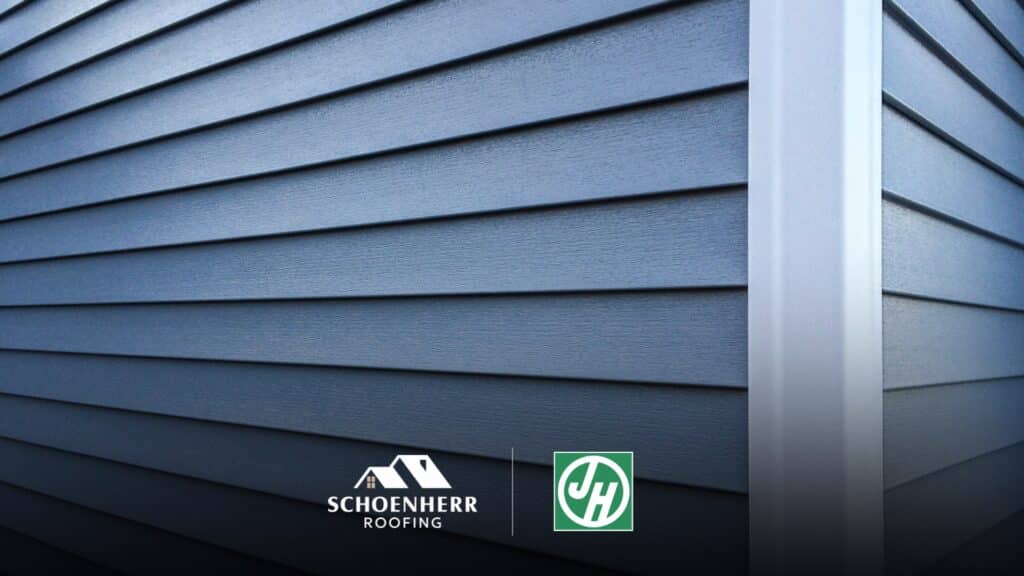
There are a number of different siding options available to modern homeowners, ranging from traditional wood to vinyl to aluminum to steel. And because the material you select will affect your home’s aesthetics and curb appeal, as well as the total cost of the project, it’s important to think carefully about your choice.
We’ll try to help you do exactly that below, by closely examining one of the most popular types of siding on the market: James Hardie siding. We’ll explain what this kind of siding is and share some of its most noteworthy benefits and drawbacks. We’ll even identify some of the situations best suited to its use and provide some maintenance tips, which will help maximize its lifespan.
What Is James Hardie Siding?
James Hardie siding — also called simply Hardie siding or Hardie plank — is a type of fiber-cement cladding, made from materials designed to combine the strength of masonry with the look of traditional wood.
Each board is made from a mix of Portland cement, sand, and cellulose fibers. The cement and sand create rigidity and provide weather resistance, while the cellulose fibers add flexibility and help the boards withstand the kind of expansion and contraction temperature changes create.
James Hardie siding comes in several different profiles (shapes and styles) to match different architectural styles. A few of the most popular options include:
- Lap Siding: This profile mimics the classic horizontal plank look of wood clapboard.
- Shingle Siding: This profile comes in individual panels and replicates the appearance of cedar shakes.
- Board-and-Batten: A vertically oriented profile that includes a combination of wide boards and narrow battens.
- Panel Systems: This profile features large, smooth sheets.
Additionally, James Hardie siding is available in an array of colors, including primed-for-painting, if you’d like to finish them yourself.
Seven Important Benefits of James Hardie Siding
There’s no doubt that Hardie plank offers a number of benefits that many homeowners love — that’s part of the reason it has earned a reputation for being one of the leading options on the market.
We’ll share seven of the key benefits James Hardie siding provides below.
1. Incredible Durability
Unlike some types of siding that may only last for 20 years or so, fiber-cement is engineered to last.
The combination of materials used in the siding creates boards that are resistant to rot, swelling, wind, and warping — even when they’re installed in damp or humid environments. And unlike wood siding, James Hardie siding won’t attract carpenter ants or termites, and it stands up well to extreme temperatures.
Ultimately, with proper installation, Hardie siding often lasts for 40 to 50 years or more.
2. Fire Resistance
For obvious reasons, fire resistance is a characteristic that’s important to many homeowners who’re trying to pick the best siding for their home. And this is another area in which Hardie siding shines.
Because fiber-cement contains no combustible materials, James Hardie siding is non-combustible. This means it won’t ignite when exposed to a direct flame; in fact, it can even help slow the spread of fire from neighboring structures.
This added protection may even entitle you to reduced home insurance premiums or help you satisfy local fire-safety codes if you live in a fire-prone region.
3. Low Maintenance
Many types of siding require frequent maintenance. Wood siding, for example, requires a lot of maintenance. In addition to regularly cleaning wooden siding, you’ll also need to repaint it every 5 to 7 years.
But James Hardie siding is designed for minimal upkeep.
The manufacturer’s factory-primed boards hold paint exceptionally well if you decide to paint them yourself, and you’ll generally only have to repaint them once every 8 to 15 years, depending on your local climate.
James Hardie siding planks that are finished with ColorPlus Technology require even less-frequent refinishing, as they feature multiple baked-on coats. These coats naturally resist fading, peeling, and chipping, and rarely need repainting more frequently than once every 20 years — if ever.
In practice, most James Hardie products require nothing more than a gentle wash with a soft brush and mild detergent once or twice a year.
4. Versatility
Another reason Hardie plank is so popular is that it is so easy to find a specific product that suits your needs.
Whether you want the timeless look of clapboard, the rustic charm of cedar shakes, or a sleek modern façade, James Hardie surely offers something that’ll provide the texture, profile, and colors you want. From traditional lap siding to vertical board-and-batten or smooth contemporary panels, the design flexibility makes it easy to find something that’ll work for your home.
Additionally, James Hardie siding products are available in an array of colors. While the specific colors available differ from one market to the next, there are 18 “off-the-shelf” colors offered in most regions. Additionally, James Hardie offers more than 700 custom colors in the brand’s Dream Collection.
5. Increased Home Value
In addition to all of the benefits James Hardie siding provides for homeowners while they’re still living in their home, it also helps increase home values when it comes time to sell. And it does so in several key ways.
For example, while aesthetic tastes are certainly subjective, most people will agree that James Hardie siding looks fantastic on most homes. And because it retains its good looks for decades, it’ll even continue to boost your home’s curb appeal for years after you’ve had it installed.
Additionally, the product’s durability, energy savings, and low maintenance requirements also tend to make your home more attractive to buyers. In fact, a 2023 cost vs value report by The Journal of Light Construction found that fiber cement siding helped increase the sales price of a home by as much as $17,000.
6. Impressive Warranty
Another impressive benefit Hardie plank provides is the warranty backing it. Most products in the brand’s lineup come with a 30-year, transferable, non-prorated warranty. This long coverage period reflects the company’s confidence in the durability and weather-resistance of its fiber-cement products.
Just be sure that you have a reputable contractor install the siding for you, as warranty claims may be denied if James Hardie determines that your siding wasn’t installed properly.
It also bears mentioning that when you have Schoenherr Roofing install James Hardie siding (or any other siding) on your home, you’ll also benefit from our own 50-year warranty to provide even greater peace of mind.
7. Brand Reputation
For decades, James Hardie has been the name most homeowners and contractors associate with fiber-cement siding. The brand pioneered the category in the 1980s, and it continues to dominate the market today, thanks in part to its consistent quality and research into performance and design.
James Hardie’s extensive network of certified installers and strict quality-control standards mean that products are tested and proven in every U.S. climate zone, from humid coastal regions to places with brutal winters like we experience here in Michigan.
This long track record gives homeowners extra confidence that their investment is backed by industry leadership, strong customer support, and nationwide availability of materials and service.

Four Important Drawbacks of James Hardie Siding
It’s probably becoming apparent by this point that James Hardie siding offers a ton of value to homeowners. However, that doesn’t mean it’s the perfect siding choice for all situations — no product is.
So, be sure to consider a few of the most important downsides of James Hardie siding, including the following four:
1. Higher Upfront Cost
Simply put, James Hardie siding typically costs much more than many other siding options, including wood or vinyl. So, while James Hardie siding tends to last longer than many more affordable options and therefore provides great long-term value, it’s important to understand that your initial investment will be higher.
2. Labor-Intensive Installation
Fiber-cement is dense and heavy, which means that the installation process is quite labor-intensive and leads to longer project timelines. But cutting, lifting, and fastening the boards properly not only takes longer, it also requires a highly trained crew, equipped with the right saw blades, safety equipment, and fastening systems.
3. Weight and Handling
The material’s weight doesn’t only present an installation challenge; it also makes transporting and installing the boards tricky — especially on multi-story homes. This means that extra care is required to avoid cracking edges during handling, and some projects may need additional framing or structural checks to support the load.
4. Professional Help Is Required for Color Changes
While factory-primed boards can be painted on-site, the ColorPlus finish isn’t meant for frequent repainting. If you ever want a new color, you’ll need professionals to prep the boards and then refinish them with high-quality acrylic paint. This will not only represent an additional cost, but it may also void your ColorPlus finish warranty.
Is James Hardie Siding Right for Your Home?
James Hardie siding may not always be worth the added expense over something like wood or vinyl siding. However, the following situations represent some of the best scenarios in which the higher initial investment may be justified:
- You want an extremely low-maintenance siding: If you want to avoid the kind of maintenance and frequent refinishing work necessary with wood and some other siding materials, James Hardie siding is a great choice.
- You live in an area with a humid climate: If you’re located in an area that experiences heavy rain, salty air, or year-round humidity, you stand to benefit from Hardie Plank’s resistance to rot, swelling, and termites.
- Your region has frequent wildfires or strict fire codes: The non-combustible fiber-cement makeup adds an extra layer of protection and can help your home meet local fire-safety requirements.
- You plan to keep your home for decades: If you expect to stay in your home for an extended period, the 40- to 50-year life span of James Hardie siding may justify the higher upfront costs.
- You live in a neighborhood with a strict HOA or important historic character: The broad range of textures and ColorPlus finishes can make it easier to match the aesthetic requirements imposed on you.
- Your property experiences significant seasonal swings: James Hardie siding remains stable and resists warping in the kind of drastic seasonal changes that are common in Michigan and some other areas.
- You’re already having work completed by an exterior contractor: If you’re already working with a professional crew, you may be able to enjoy modest savings on the installation of James Hardie siding.
James Hardie Siding Maintenance Tips
James Hardie siding may require relatively little maintenance compared to wood or some other kinds of siding, but by carrying out a few simple tasks, you’ll be able to keep it looking great and performing well for decades. Most importantly, you’ll want to:
- Wash your siding once or twice a year. To wash James Hardie siding, rinse it with a garden hose and gently scrub the surface with a soft brush and a bit of mild, non-abrasive detergent. Just be sure to avoid using pressure washers set above 1,500 psi, as this may damage the finish.
- Inspect all the caulked joints annually. Check the seams around your home’s windows, doors, and trim for cracks. If you notice any gaps, re-caulk them with a high-quality exterior sealant to keep water out.
- Touch up minor chips promptly. Use James Hardie’s touch-up kit to prevent moisture from reaching the substrate and to keep your cladding looking its best.
- Prevent vegetation and sprinklers from damaging the siding. Maintain at least a 6-inch ground clearance and keep all shrubs, trees, and mulch from touching the siding. Additionally, direct sprinklers away from the boards to keep them from being constantly sprayed.
- Check your gutters and flashing regularly. It is important to ensure your downspouts don’t discharge water near your home’s foundation to prevent moisture from penetrating beneath the panels.
- Plan to repaint it periodically if you opt for primed, paint-them-yourself boards. If you opt for factory-primed James Hardie siding, you’ll typically need to apply a new coat every 8 to 12 years.
James Hardie Siding Questions (FAQ)
Still have questions about James Hardie siding? Need more information to help you weigh the pros and cons of the material? We’ve rounded up some of the most common questions we hear from our clients below.
What is the downside of James Hardie siding?
The primary downside to Hardie siding is the high upfront costs it presents. It also requires professional installation by a skilled team, given the material’s weight. However, it provides exceptional long-term value, as it lasts much longer than many other kinds of siding.
What is the lifespan of James Hardie siding?
When well cared for and properly installed, Hardie plank may last for 50 years or more.
What is the difference between Hardie board and fiber cement siding?
Hardie board (also known as James Hardie siding or Hardie plank) is a brand of fiber cement siding. It’s actually one of (if not the) most familiar fiber cement brands, so the term “Hardie plank” is often used to refer to all types of fiber cement siding.
Does Hardie siding chip easily?
No. Hardie siding is quite durable and less likely to chip than wood or vinyl siding.
Why is James Hardie siding so expensive?
James Hardie siding is expensive, in part, because the actual material costs more to make than wood or vinyl. However, it also requires a lot of skilled labor to install, which further increases the price. It should be noted, however, that it tends to last longer than many other kinds of siding, meaning that it provides better long-term value, despite requiring a larger upfront investment.
Will James Hardie siding increase my home value?
In many cases, Hardie siding will increase your home’s value. On average, it increases the sale price of a home by more than $17,000.
What is the longest-lasting siding?
The specific siding that will last longest for your home depends on dozens of variables. With that said, Hardie plank and metal are generally considered two of the longest-lasting siding options.
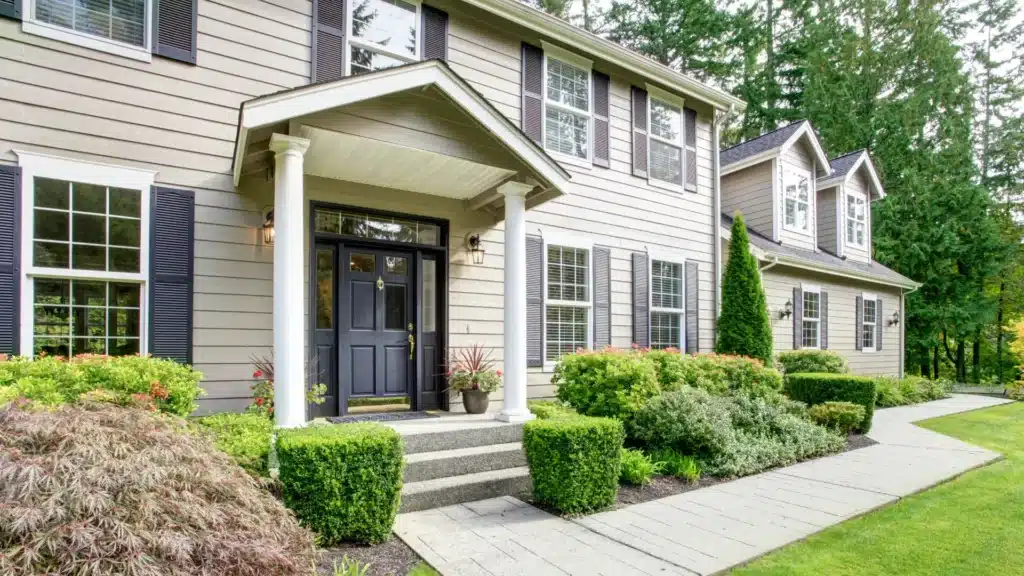
Trust Schoenherr Roofing for All Your Siding Needs!
Whether you think James Hardie siding is the ideal choice for your home or you’d rather discuss some other options, the professionals at Schoenherr Roofing can help! Whether you are interested in fiber cement siding, natural wood siding, vinyl siding, or any other material, we have the skills, expertise, and experience to provide the tailored solutions you deserve.
We’ve been providing siding installations and repairs for homeowners in Michigan for more than 30 years. Contact us today and see the Schoenherr Roofing difference for yourself!
Sources and References
- James Hardie – “Siding Performance & Durability”
Manufacturer overview of how James Hardie products are engineered to resist moisture, pests, extreme weather, and fire, explaining the material science behind fiber-cement’s long life and low maintenance.
https://www.jameshardie.com/why-james-hardie/siding-performance-durability - Nichiha – “Fiber Cement Siding vs Vinyl Siding”
Detailed comparison of fiber-cement and vinyl siding, highlighting differences in lifespan, maintenance requirements, environmental impact, and fire resistance.
https://www.nichiha.com/blog/fiber-cement-siding-vs-vinyl-siding - This Old House – “All About Fiber Cement Siding”
Comprehensive guide to fiber-cement siding that covers its composition, manufacturing process, key benefits such as durability and fire resistance, and common drawbacks like higher cost and installation complexity.
https://www.thisoldhouse.com/siding/21017880/all-about-fiber-cement-siding - Fixr – “Fiber Cement Siding Buyer’s Guide: Pros, Cons, Cost, and Maintenance”
Buyer’s guide explaining expected lifespan, maintenance needs, and cost considerations of fiber-cement siding, with practical tips for homeowners evaluating long-term value.
https://www.fixr.com/articles/fiber-cement-siding-buyers-guide - eXp Realty – “Pros and Cons of Hardie Board Siding on Your Home”
Balanced look at the advantages—durability, low upkeep, design flexibility—and potential downsides, including higher installation costs and the need for skilled labor.
https://www.exprealty.com/guides/hardie-board-siding - The Spruce – “HardiePlank vs. Vinyl Siding”
Side-by-side comparison of HardiePlank fiber-cement siding and vinyl siding, addressing cost, fire behavior, appearance, and performance in different climates.
https://www.thespruce.com/hardieplank-vs-vinyl-siding-1821977